Feild Research 2014

journal

to enlarge the images just click on them

This trusty book was my precious companion for my amazing, month long overseas adventure last year- I have filled it with sketches, reflections, ticket stubs, maps, gallery fliers and of course, photographs – I think it has become one of my most treasured possessions.

After spending considerable time researching artists, galleries and sites I put together an application to undertake Field Research as a part of my Practice Led PhD Research at the Australian National Uni. Luckily for me that application was successful and on August 23rd last year I jumped on a big jet plane headed for America. I spent 8 days in the U.S. before heading to Japan for three weeks. For a chicka from country Australia who never expected to go overseas (does a 36hr round trip to NZ count as overseas?) this was a pretty precious experience.

I have meant to write a post about this field research since I returned home last September- there was so much to talk about that the task has just seemed way too daunting…. so I figure that instead of trying to capture my trip in words, I will give you the abridged version via a story in pictures…

Fallingwater, Pennsylvania
fw1

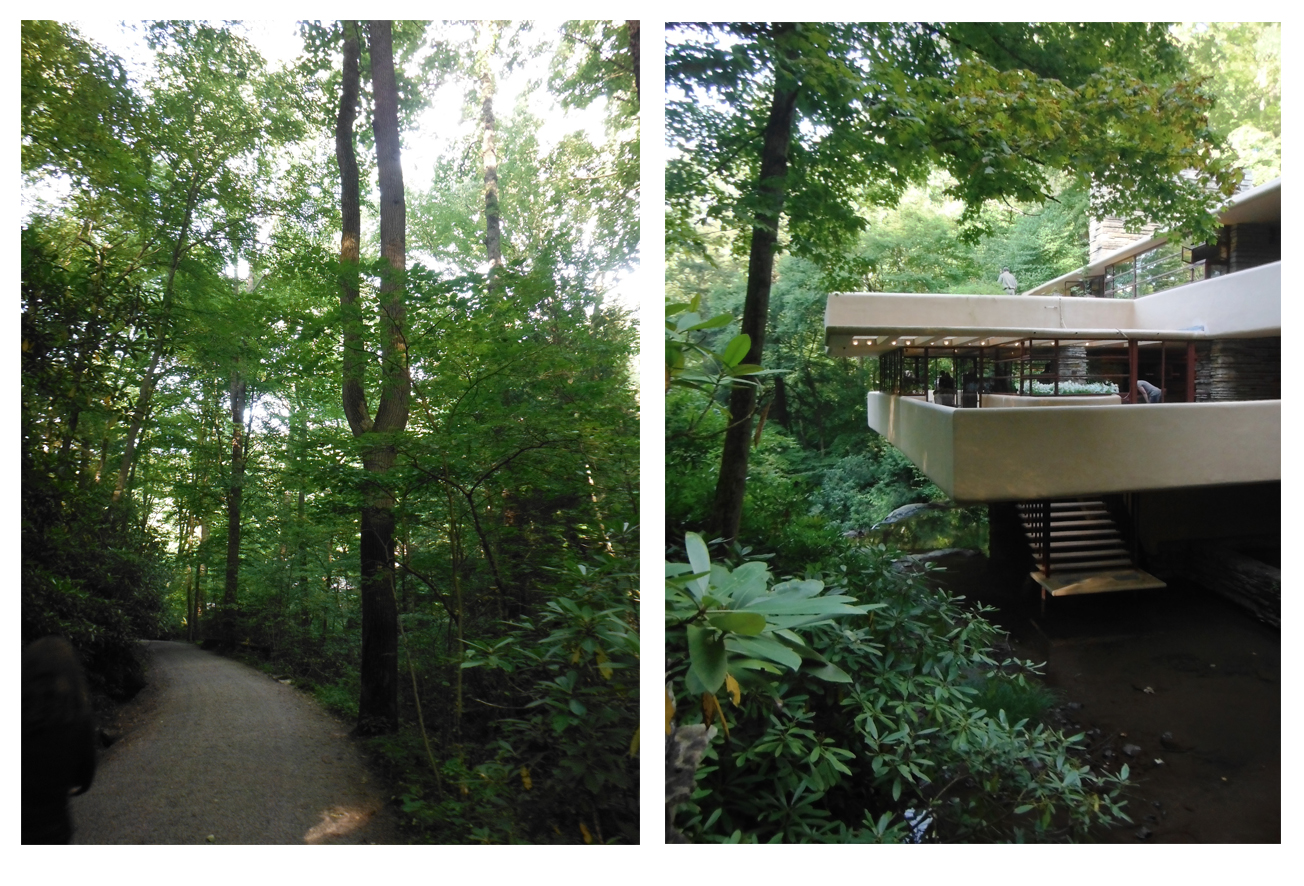
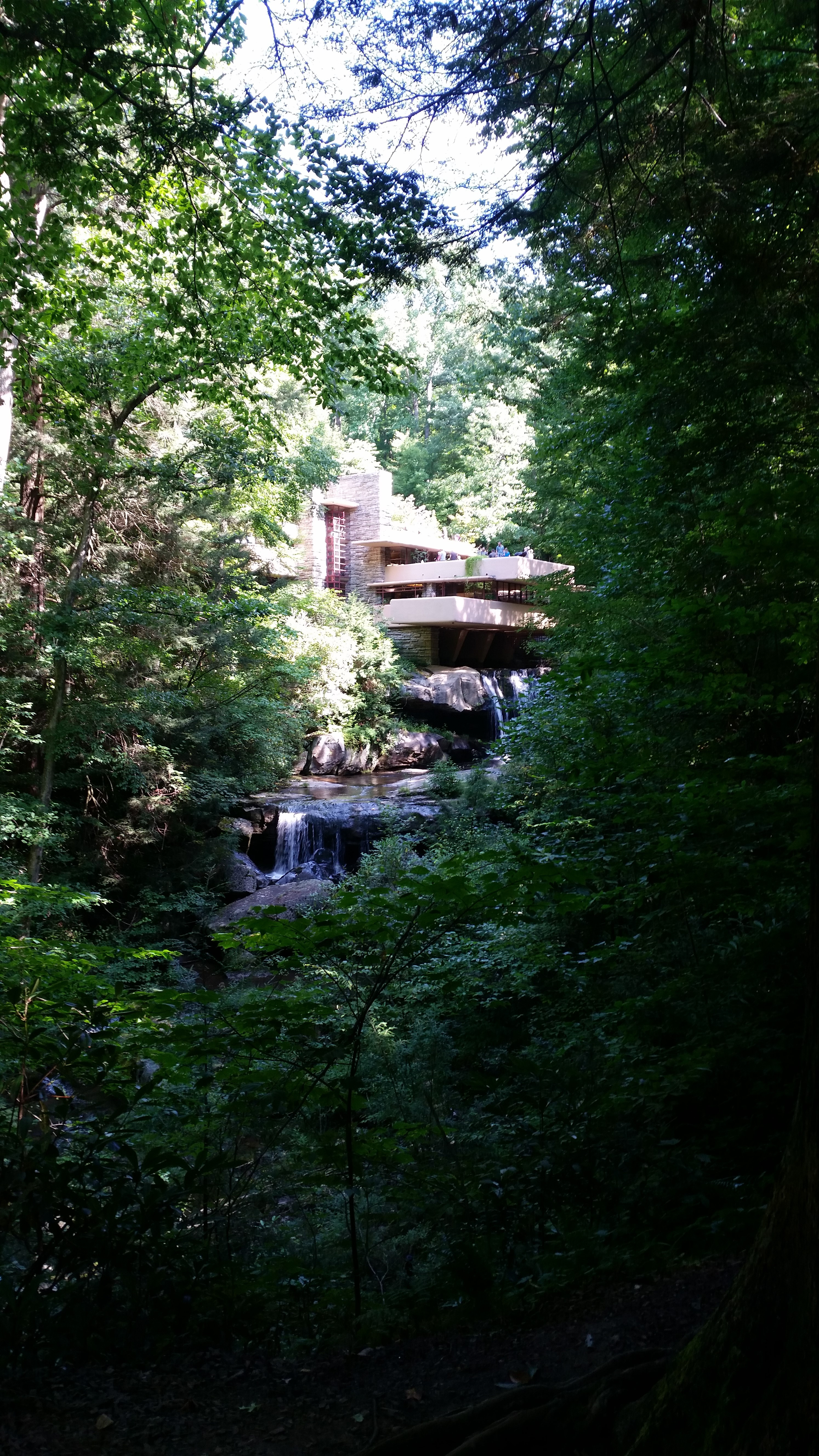
My first point of interest was Fallingwater in Pennsylvania. Designed by Frank Lloyd Wrright & constructed in the 1930s, this iconic home is built atop a waterfall in a woodland reserve. It was commissioned by the Kauffman family as a replacement for their humble wooden bungalow which had been their weekend retreat from the industrial city of Pittsburgh where they ran a very successful business. This house embodies my concept of aesthetic subjectivity- it has been designed to wrap around the needs, and the better self, of each of the occupants (Mr & Mrs Kauffman and their adult son).

I was completely rattled from my travels- I spent the first night after a long journey in a dodgy as motel, I was commanding a hire car on the wrong side of the road & had to venture into the world of Walmart before getting to Fallingwater- I stayed nearby (at a much safer motel) and spent two days at Fallingwater, and took three guided tours of the home. It restored me, it was magic – an utterly indulgent, idealised building – but magic nonetheless, go there, you’ll love it…

here’s a link to the website: http://fallingwater.org/

Here’s the money shot:
fw2

The Mattress Factory in Pittsburgh, Pennsylvania.

Here’s a link to there website http://mattress.org/

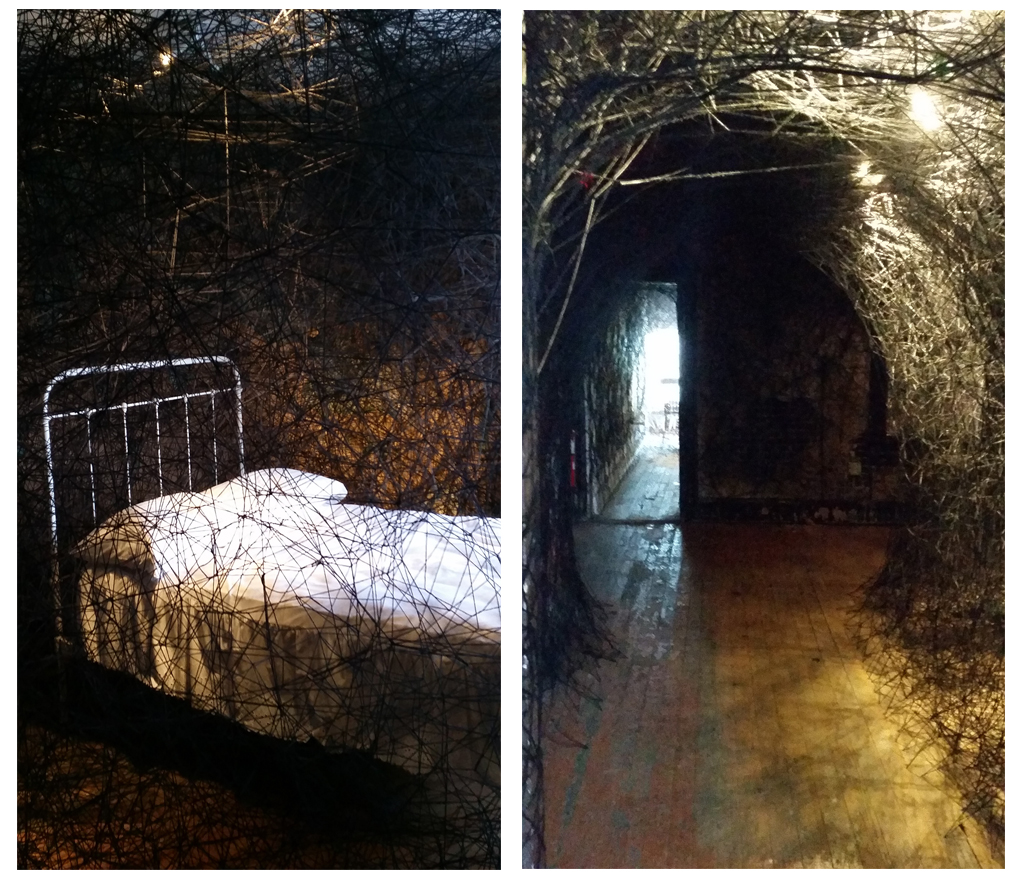
I came here primarily to see Chiharu Shiota’s installation Trace of Memory. It was meant to be a site specific installation in an old “Mexican War” House, a three story terrace just down from the Mattress Factory itself. I am not sure exactly how site specific it was but it was definitely a good example of the things that Shiota does well. It was a rather compelling space to spend time in, especially in the third floor where the summer heat filled the air and created the overbearing sense of memories presence.

shiota1

shiota2

Jame Turrell Sarah Oppenheimer

I also got to see work by Yayoi Kusama

Yayoi Kusama

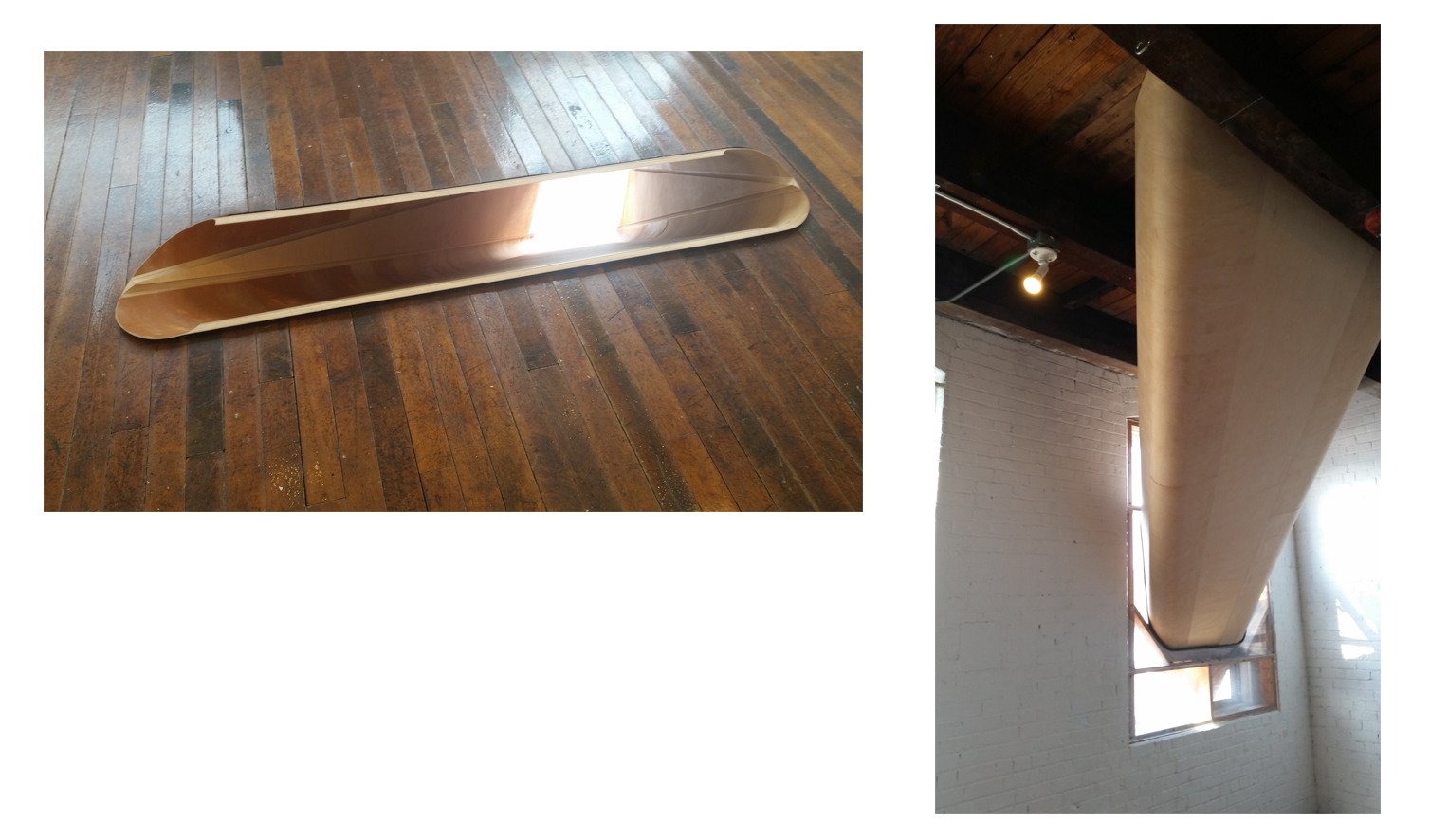
This crazy trippy tube by Sarah Oppenheimer

Sarah Oppenheimer

And early works for James Turrell which gave me a really useful context for later parts of my field research which sought him out with more focus.

Jame Turrell

New York

In fact the very next part of journey was to New York City to meet with Guggenheim curator Nat Trotman who worked on James Turrell’s 2013 retrospective at the Guggenheim, including the creation of the new work Aten Reign- created specifically for the Guggenheim’s atrium. Nat was so generous with his time, speaking with him really deepened my appreciation of Turrell’s processes. I wish I had’ve been able to see Aten Reign, the photographs of it look compelling- I met a woman at Fallingwater who had seen it for herself, I asked her what it was like, she replied with such a smile “Light, Oh! It was All Light”
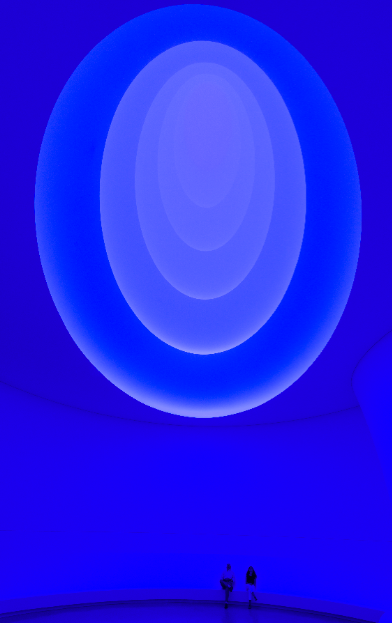
James-Turrell-Aten-Reign-2013-Guggenheim-Museum-4

check out this link too… http://www.guggenheim.org/video/james-turrell

I spent three nights in New York and I feel in love just a little bit… My first night was in Harlem and my other two nights were a little lower, West 72nd St, just near Central Park and a short walk from the Hudson River. While I loved the bustle of the city it felt as thought it pushed me out of itself, into green spaces – such as the park & the river. After spending time in the dense summer forest at Fallingwater and contemplating the pull of the natural world in the work of both Frank Lloyd Wright and James Turrell I felt kindred with their sense of connection to the natural systems that exist over and above our urban worlds.
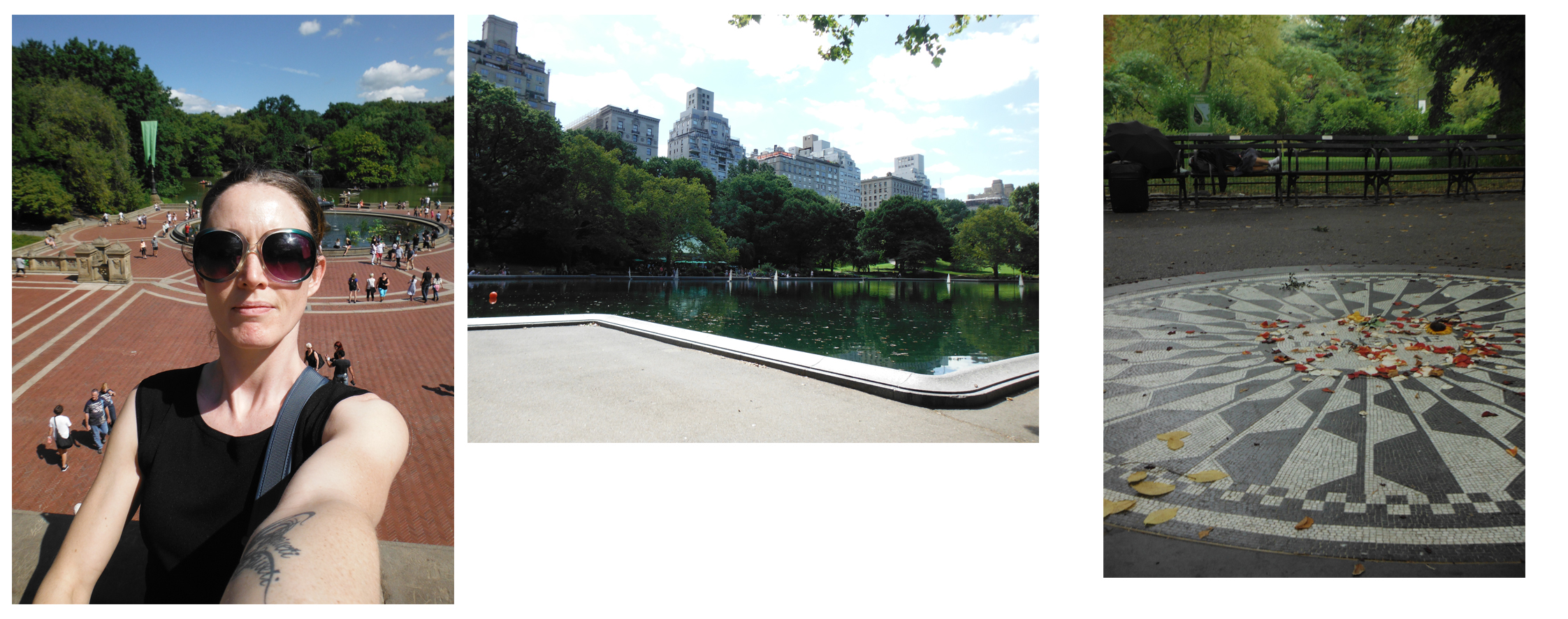
central park

I visited the Guggenheim purely to experience Wright’s architecture- it really helped me to develop some of my field questions around how and why we construct different spaces, and how human life can be enhance through spaces that service and enable particular needs and activists.

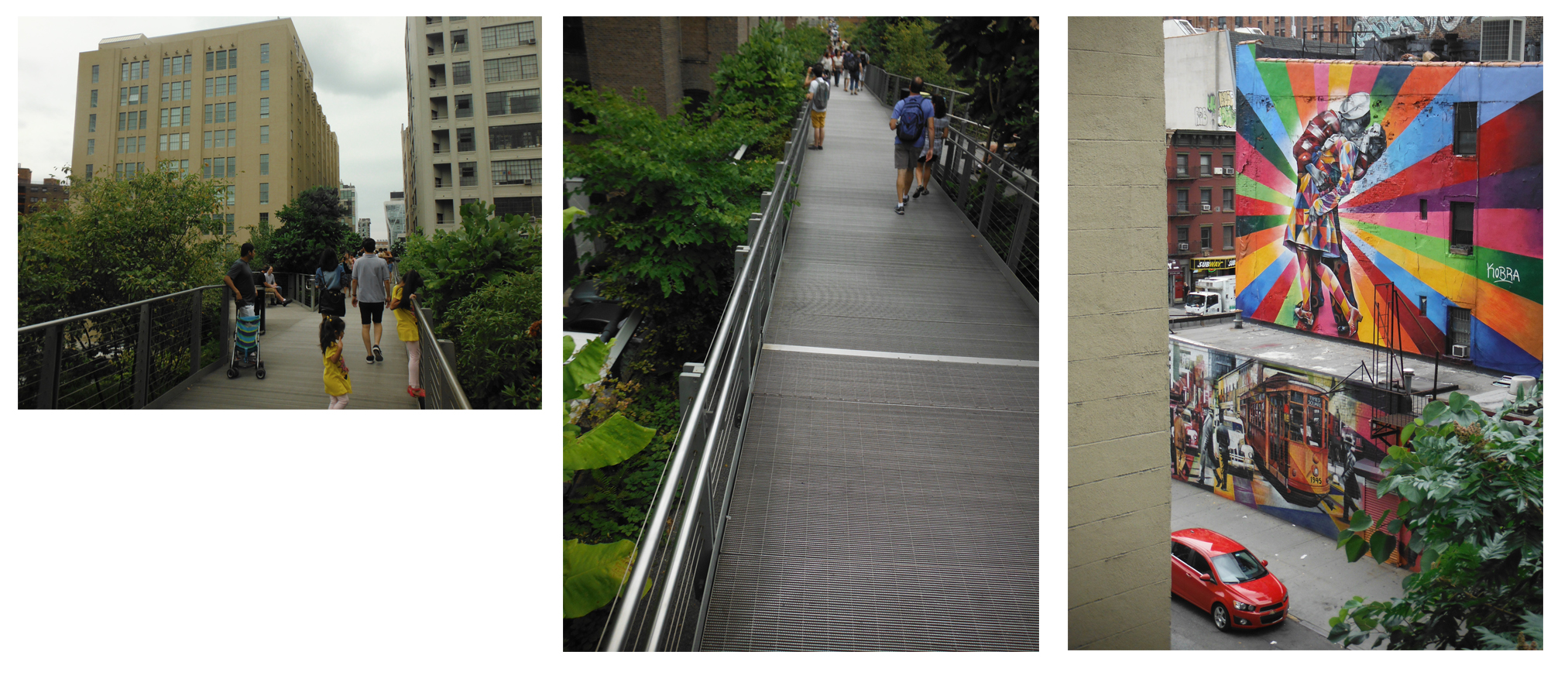
gugg

high line

Oh the High Line… a reclaimed stretch of elevated railway line in the old meat packing district in Manhattan’s Lower West Side… great example of a civic space that is able to enrich community life  …it also creates a much needed strip of organic life in a very dense concrete jungle
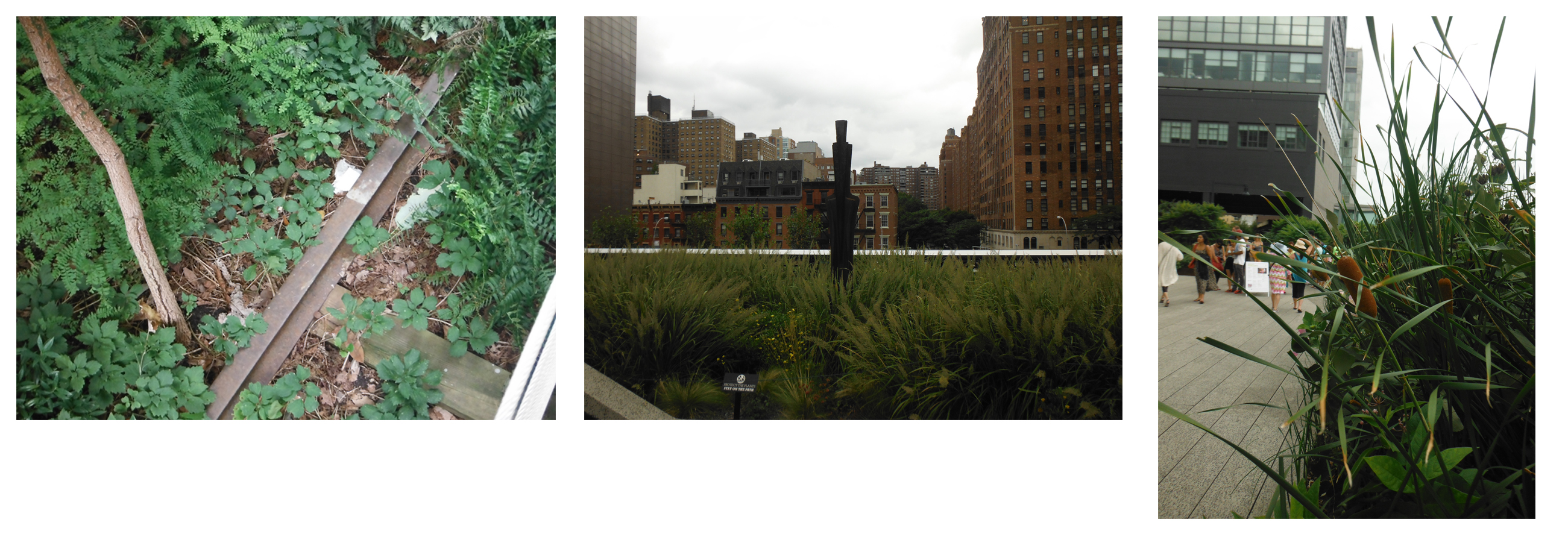
highline2

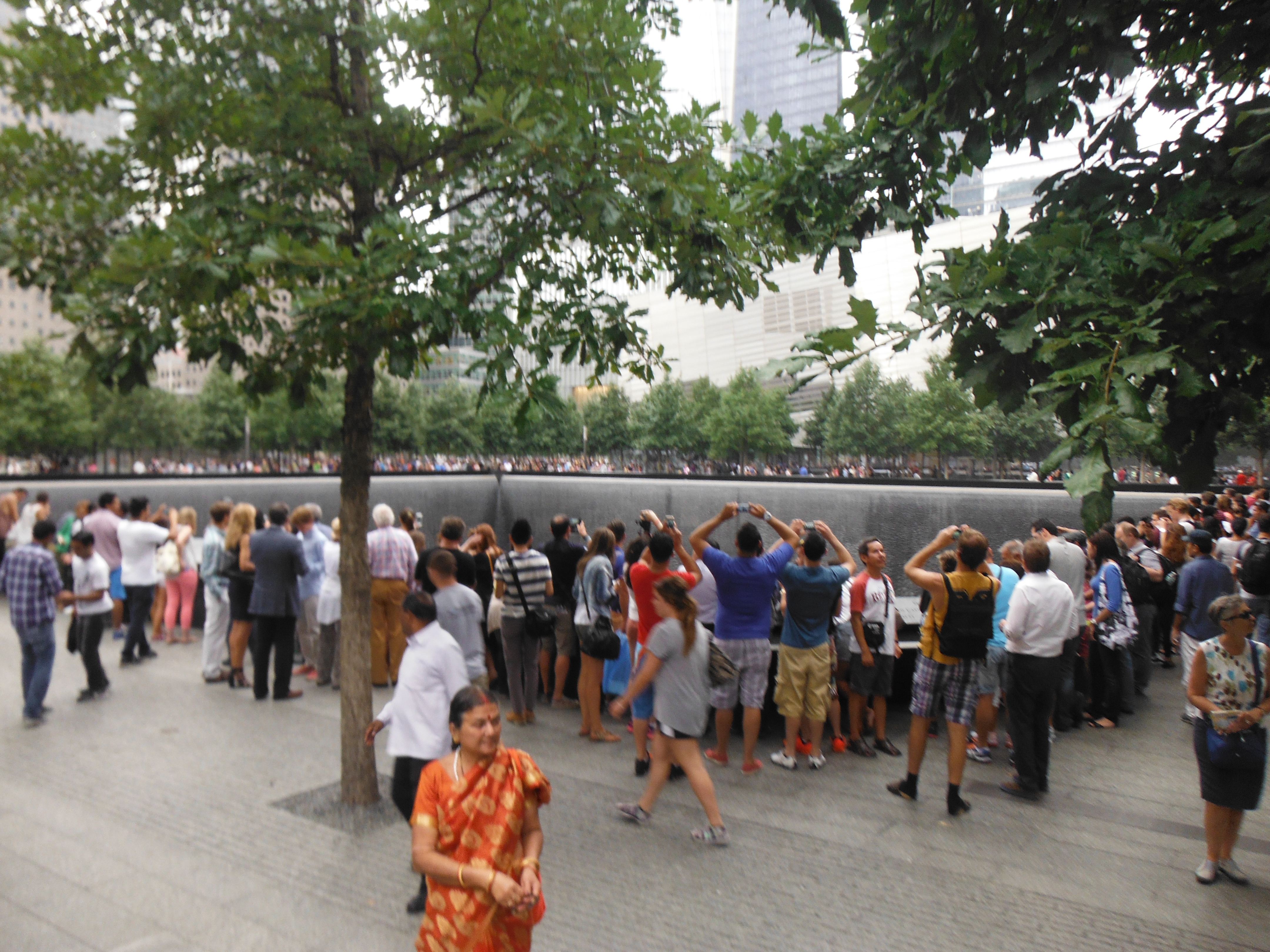
And a site that I found quite profound to visit was the 911 Memorial. I visited twice. The first time I did not take any photographs. I walked around, I watched, I observed people, I observed my own responses to the site. I was taken by the size of the pits which are now deep granite memorial pools with water endlessly disappearing down into the earth.

911_2

I thought they would be smaller somehow, they were massive, imposing. Standing beside these massive slippery, deep black holes I had the strongest sense of my own need for caution. Watching small children reach up and attempt to climb the name imprint edge I felt an embodied urgency to scoop them away in case they toppled over and fell into the pit.

Compared to the skyscrapers around it, it is clear that this site is about absence. An absence that is surreal when set within the relentless noise of new construction just nearby and the colour and movement of the thousands of visitors to the site.
911_photos

You can’t help but notice the spectacle of the site. We have become so accustomed to relating to novel, significant and compelling moments through our cameras. We photograph the present in order to preserve it, to process our feelings towards it whilst in some way deferring these same feelings for some later contemplation.

Every now and then I would notice people who clearly were not mere tourists to the site. A husband and wife stopped at the edge of one, he tenderly touched a name that was cast into the steel rim. He looked reverent and solemn. She motioned to take his photograph.

911_3

Well that’s the first part of my journey & it’s all I have time for for now… I’ll share my thoughts & images from Japan as soon as I get a chance to 🙂 

Taping Spaces Fun4Kids Festival June 28 – July 4 2015

assorted colour_1

*CLICK on the IMAGES to Enlarge them 🙂

here’s a link to a pretty well represented interview that I did with the Weekly Times in the lead up to Fun4Kids

http://www.weeklytimesnow.com.au/country-living/warrnambools-fun4kids-has-a-sticky-situation/story-fnkeragy-1227411149684

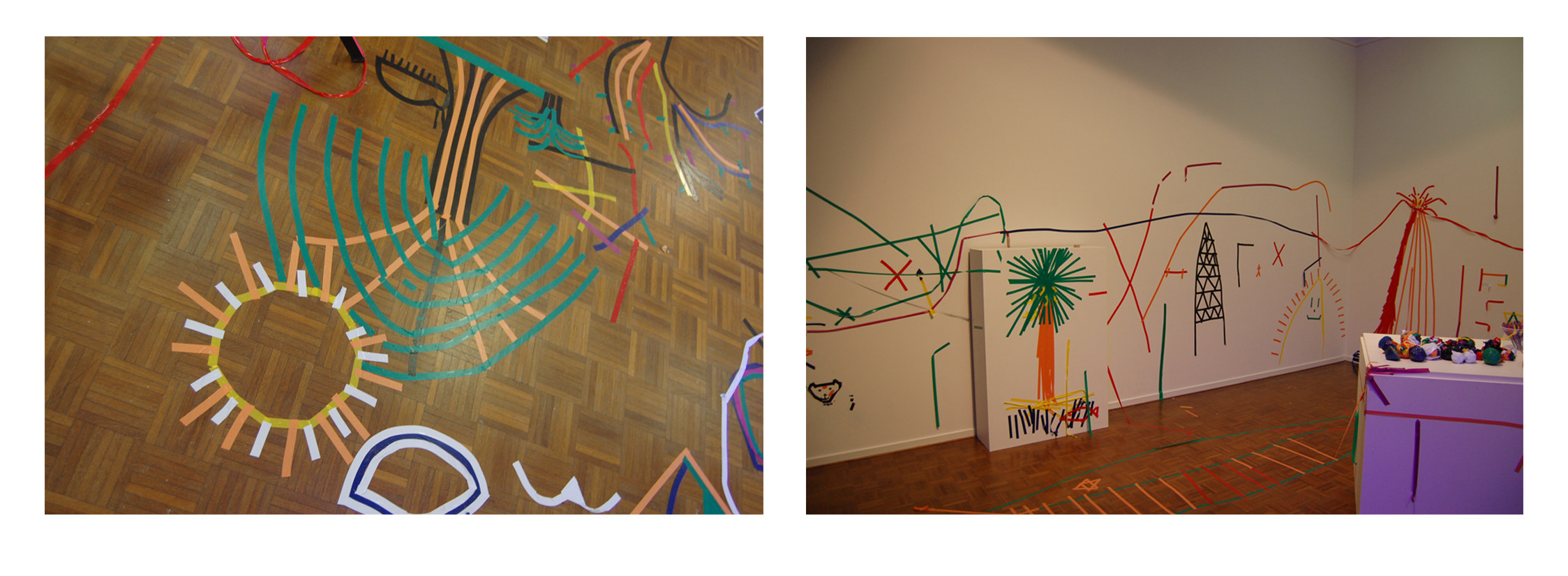
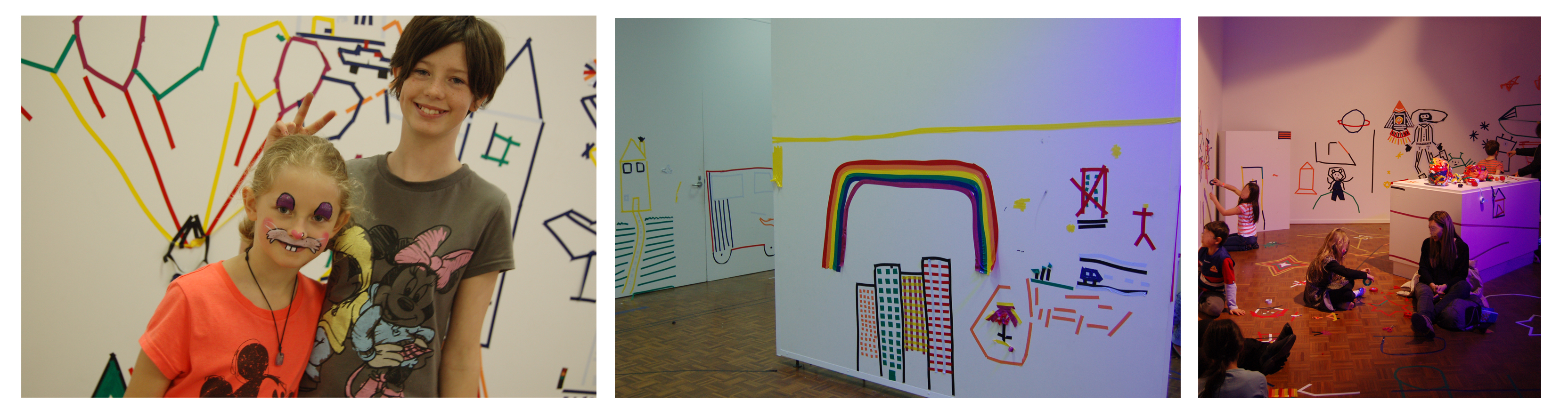
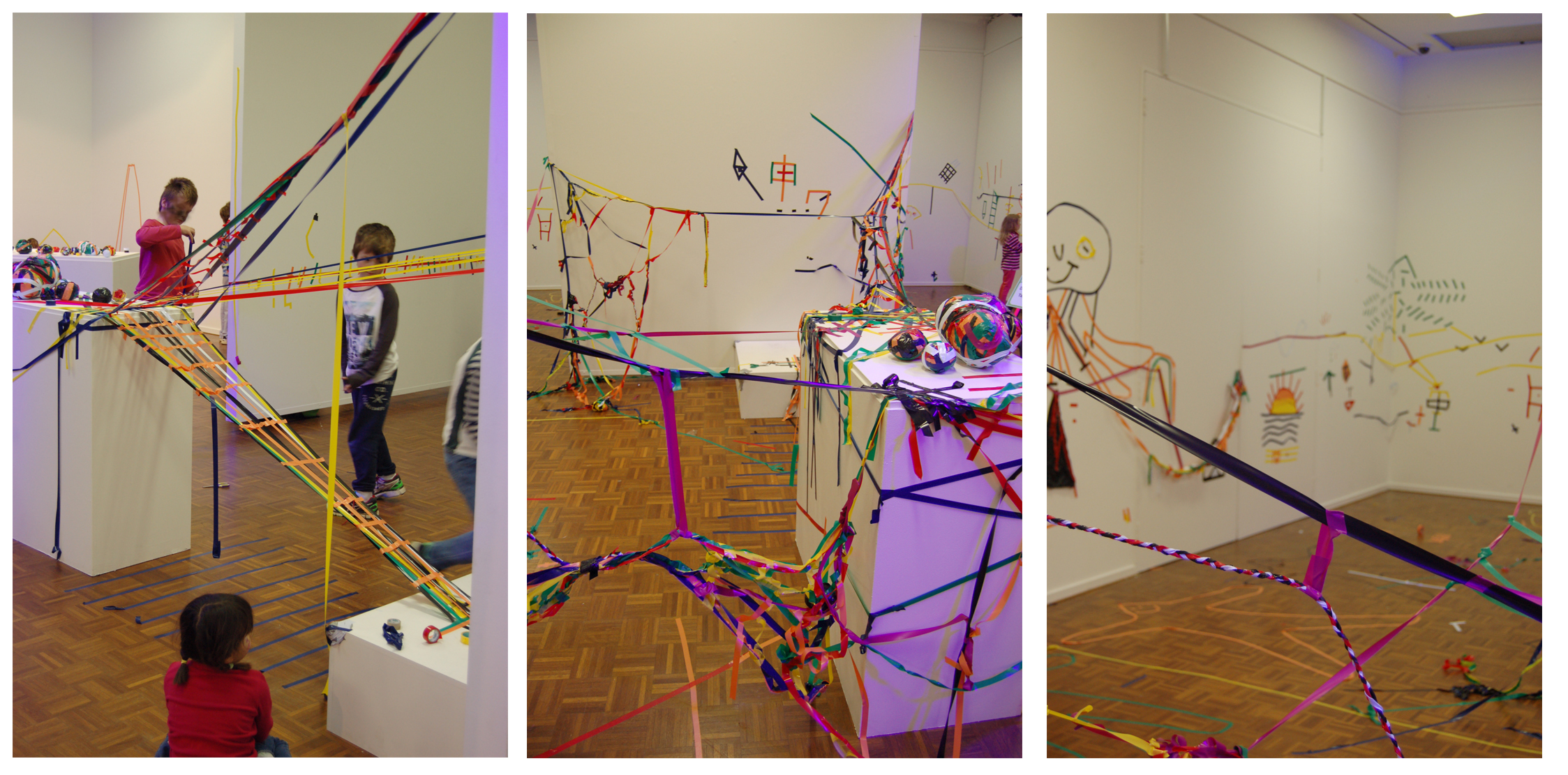
Earlier this year I was approached to run an art space at this year’s Fun4Kids Festival. The festival’s zone’s programmer, Rebecca Elmes, had found a rather cool program by Melbourne based artist Briony Barr. Tape It is a collaborative drawing program developed by Briony. Participants use different coloured electrical tape to create “expanded” drawings – as in drawings that extend across walls, floors, windows and other objects within the space. These cooperative drawings conclude with “undrawing” where participants peel the drawings up and layer them to create three dimensional objects. These objects can then be cut open to reveal the coloured layers that resemble a geological form. You can find out more about Briony’s practice by following these links…

http://www.brionybarr.com/Tape-It-Collaborative-Drawings

We decided to approach this project as a collaborative mentorship, we called it Taping Spaces. Briony guided me through Tape It’s concepts and logistics. I spent a day at Art Play Melbourne to witness Tape It in motion and we had many phone calls and emails in the build up for the festival. We successfully applied for a Regional Arts Victoria Grant to help make this all happen.

space day 2 assorted assorted_3

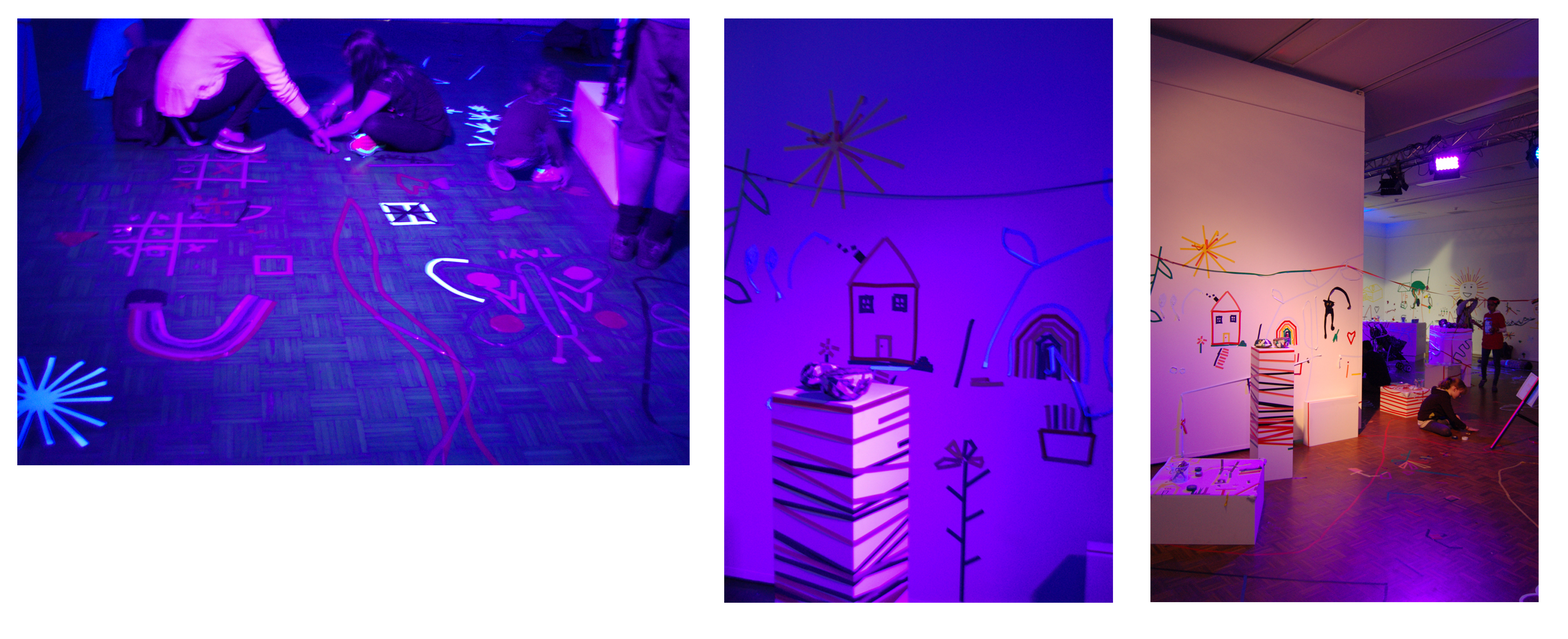
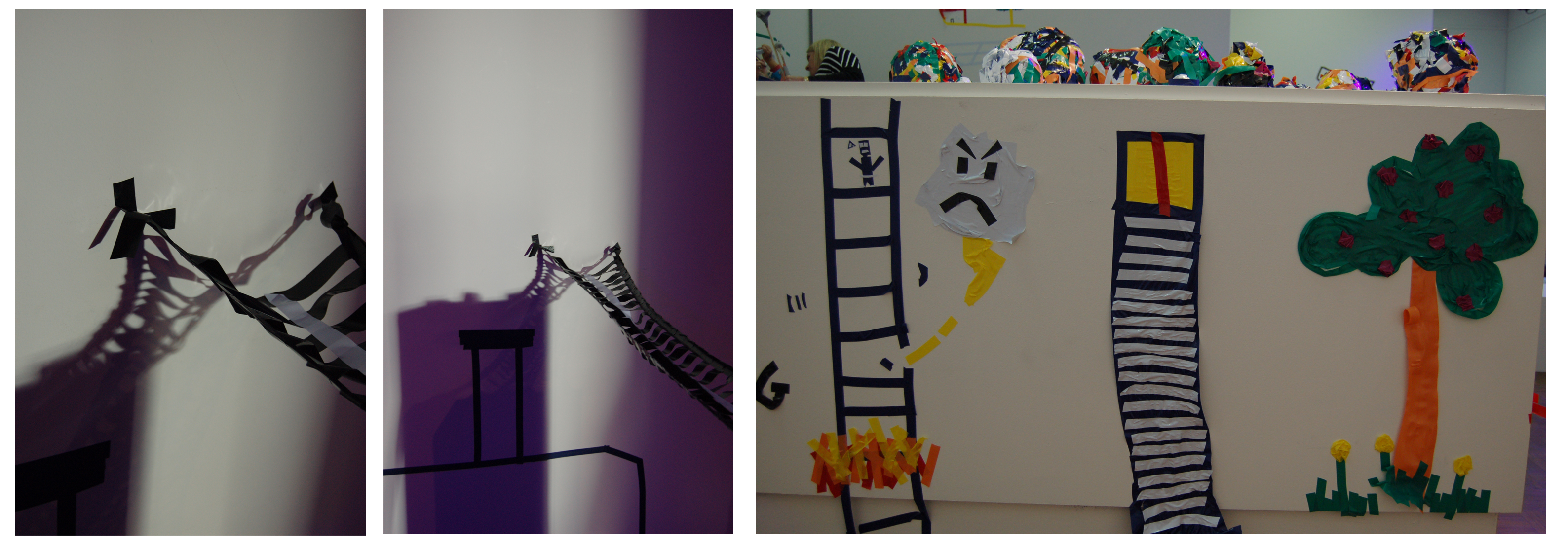
In my own practice I am interested in how we create the different spaces that we occupy- what are the ways in which we manage to create different environments from day to day or from person to person. This is where the collaboration kicked in. Fun4Kids is a 7 day festival. Taping Spaces was set-up in the large space that is the Warrnambool Art Gallery’s Temporary Exhibition Space. The festival director was keen to make sure each family visiting the festival had a different experience each day. To do this I ran a different drawing theme each day- The Rainforest, In the City, The Milky Way etc. I was also able to tweak physical aspects of the space- movable walls, rearranging display boxes, changing lighting (inc. UV Light & Spotters) and music. It was brilliant to be able to play with the space in these different ways over the course of the week. From start

assorted 3d

UV

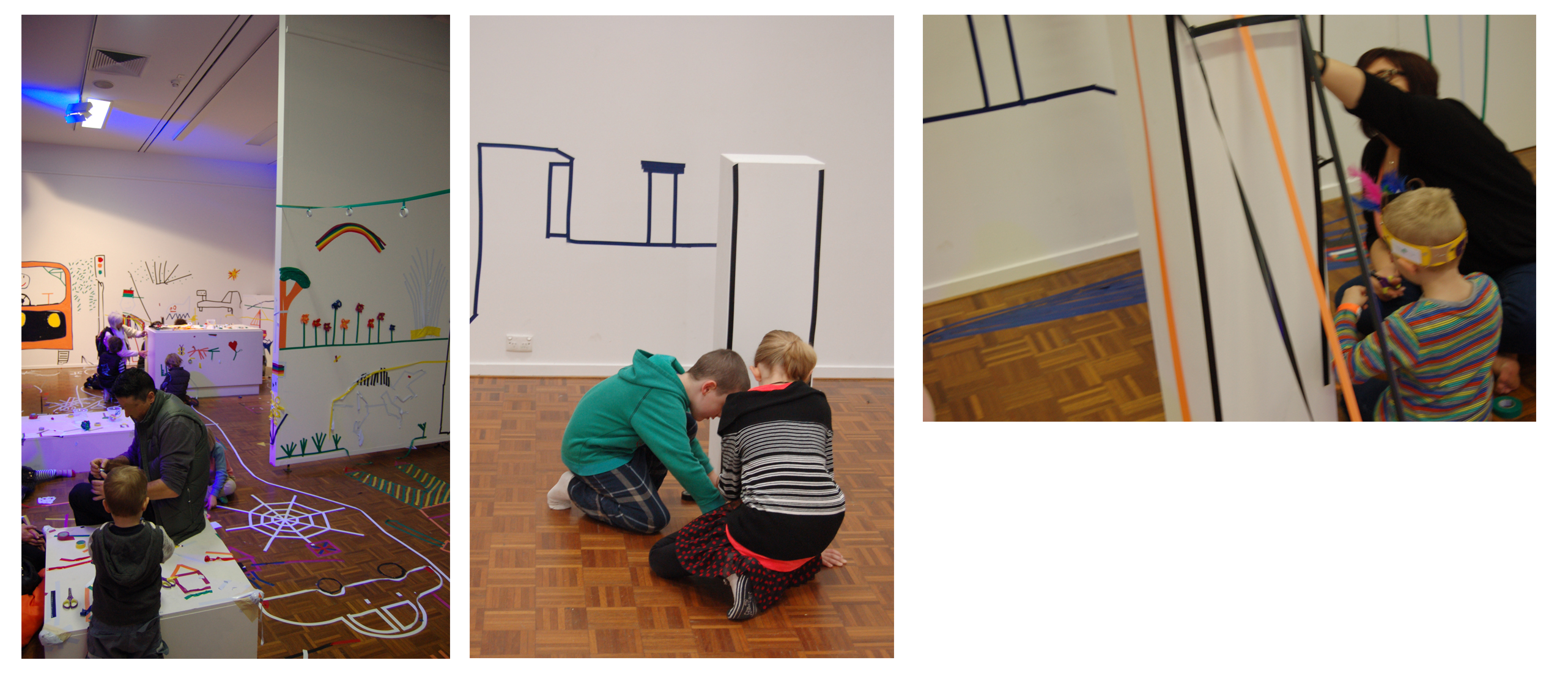
Most importantly people had a ball. Families would spend an hour and a half at a time, many came back to keep drawing over the course of the festival. It is this aspect of arts programing that I have really come to love- setting up situations that enable people, especially families, to interact with each other.

people interacting

peoples

bridges shadow

Each day we would start with a blank canvas that was transformed into a temporary world. Each afternoon we would “undraw” the space until it appeared as though nothing had happened. It was brilliant fun, and exhausting too. On the final day Dion Barker set-up a time lapse camera to capture this process. You can find it by following this link- it’s pretty cool (thanks Dion!)

structures

Red line

Taping Spaces produced so many colourful creations, it was hard to pick favourites. Such a great experience, thanks for letting me hop into your program Briony Barr! & thanks for the great opportunity Rebecca Elmes 🙂 last day

assorted_2  

Inside Out, Scope Galleries November 2014

InsideOutside

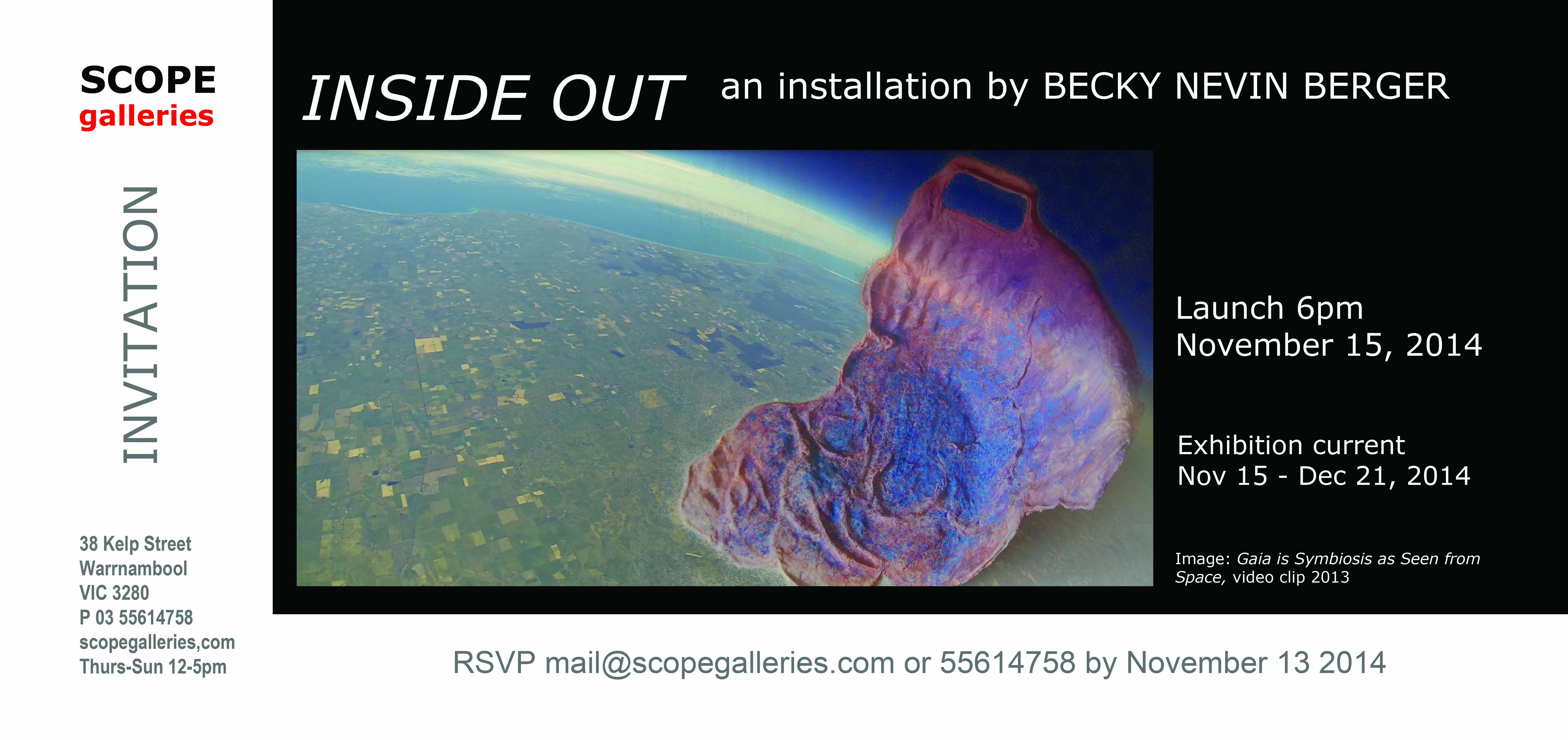
Last year, Liza McCosh, Director of Scope Galleries, generously invited me to exhibit my video work “Gaia is Symbiosis as Seen from Space”. I took this as an opportunity to develop some of the thinking contained in the video as well as to further develop my installation processes. Inside Out marked an important step forward in my thinking about my specific research as well as my broader understanding of how art produces knowledge. I came to realise the extent to which this video work is very much in conversation with the work of colonial landscape painter Eugene von Guerard and his observations which sought to understand the landscape as an interconnected ecosystem. I also came to realise the important role art plays in not only observing and critiquing our relationship to the world but also how crucial it is in proposing new and alternate ways to imagine this relationship.

Inside Out_3

Inside Out_4

I was fortunate to share the gallery with an exhibition titled Embedded produced by Andrea Radley, Gareth Colliton and Karen Richards. Embedded was an acclaimed exhibition of works made during a residency in the Emergency Department at South West Health Care Warrnambool. You can read more about their work by following these links:

http://www.abc.net.au/news/2014-11-15/embeded-warrnambool-art-exhibit-aims-to-cut-fears/5893508?site=southwestvic

http://www.standard.net.au/story/2693133/warrnambool-artists-find-inspiration-amid-life-and-death/

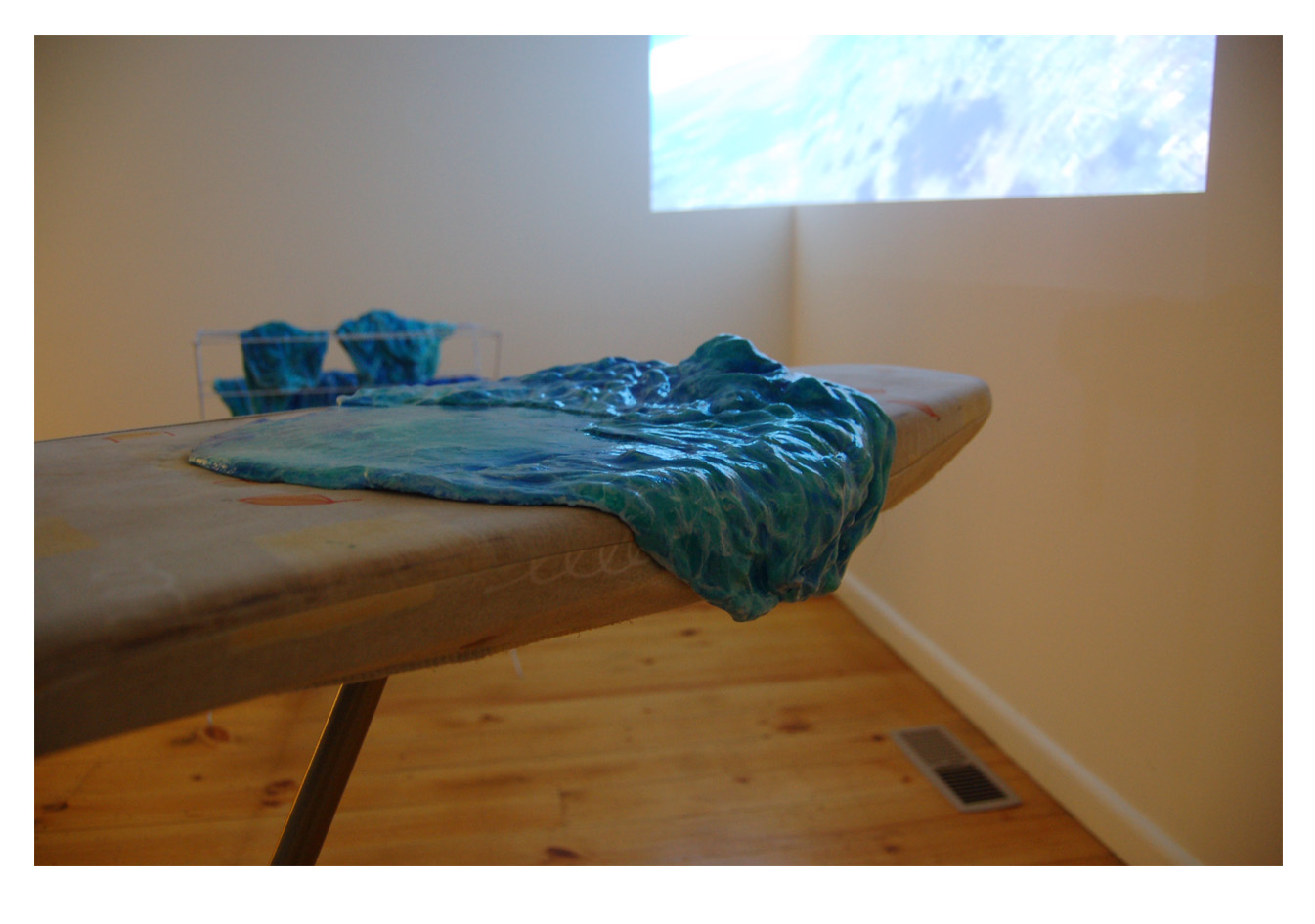
I reworked my footage from “Gaia is Symbiosis (…)”, slowly it down and playing it from end to start so as to let the viewer work backwards back to the ground. I also set this footage to a very simple soundtrack, a recording of my washing machine as it works through a wash cycle, occasionally thumping as it spins itself off balance. The spinning footage and the sound of the washing machine were a perfect complement and worked to draw together the sense of the ordinary domestic with the sense of the “bigger picture”. I made a series of sculptures that imitated water hung out on my clothes horse and my ironing board. As a happy coincidence the smell of the running data projector was almost identical to that of a hot iron.

Inside Out_1

The following is the statement that accompanied Inside Out:

Through PhD research at the Australian National University Canberra I have been examining the overlap of body and environment as an “aesthetic subjectivity”. This way of understanding subjectivity emphasises how embodied consciousness is embedded in and emergent from its environment- an environment that we primarily experience aesthetically as the combination of sensation, emotion and meaning. A creative practice led inquiry into my domestic environment has centered this research. From this point I have attempted to make sense of and plot my relationship to the larger world in which I exist. I have used photography, drawing, sculpture, written reflection and sound and video recording in this continuous observation of my relationship to space.

Inside Out is a fragment of a larger body of practice that reinterprets my 2013 video work Gaia is Symbiosis as Seen from Space in order to imagine continuity between our ordinary domestic world and the larger social, ecological and cosmological realities we share.

Focusing on the aesthetic nature of our connection to the world has provided me with a way to imagine the materiality of our continuum with time and space. My aim now is to create spaces that convey this to others.

The video Gaia is Symbiosis as Seen from Space was originally created as part of “The Kitchen Table Art Expedition”, an Arts Victoria Artists In Schools Program held at Macarthur Primary School in 2013.

Inside Out_2

Hand Basin Sound Space

hand basin sound space2

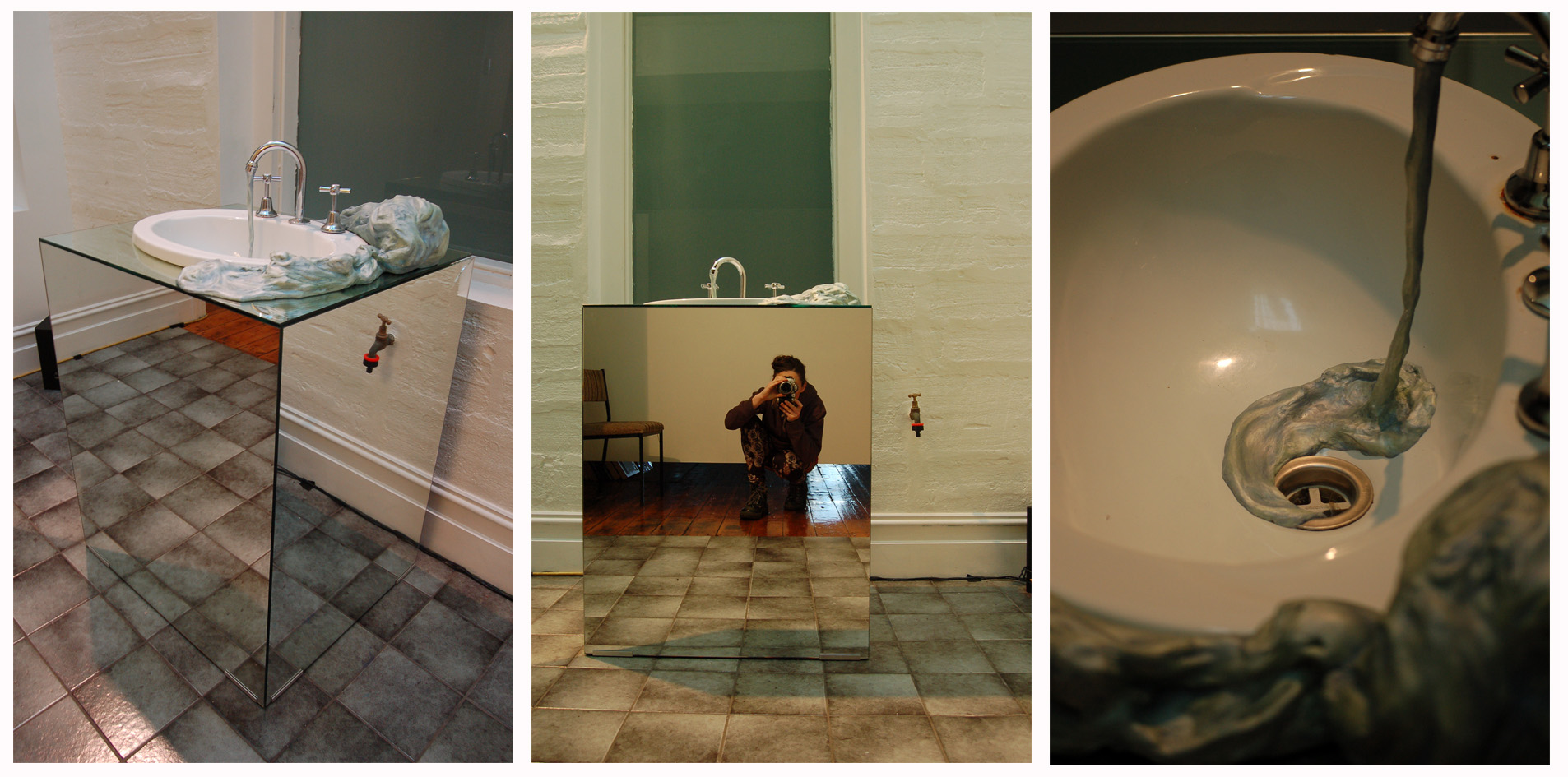
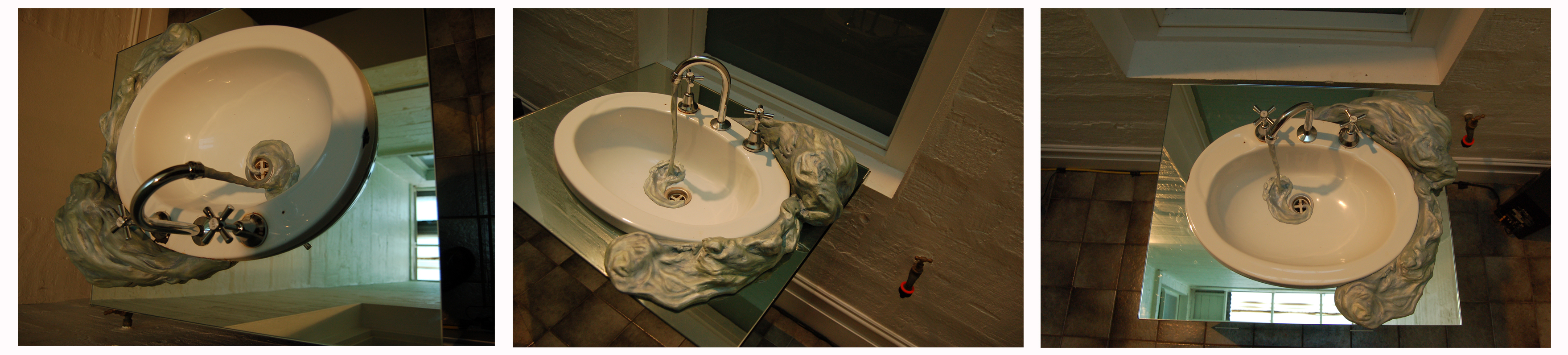
During May and June 2014 I began work on this piece. It is a transition from the smaller sculptures and drawings that marked the middle of my Practice-led PhD Research. With this work I was concerned to communicate the feeling of space that emerged through my domestic observations. A bathroom basin was replaced in our humble home and I seized it as an opportunity to push my work into installation thinking. I constructed a timber frame and had mirrors cut to fit it- the glazier reported that it was especially difficult to oval for the basin but he did well. I created a very low tech system that allows me to take the mirrors on and off as the work is presented. I fashioned faux water using plaster and acrylic paint. Small speakers are embedded in the external water form and beneath the drain. A laptop, amplifier and subwoofer were put inside the mirror box to power these speakers and two larger speakers placed further away from the sculpture inside the exhibition space.

The sounds of brushing teeth and washing hands can first be heard coming from basin, these are gradually intertwined with spoken word and a guitar piece composed by my partner Dean. These sounds are then picked up and extended on the second set of speakers that sit away from the sculpture. This interplay of sounds across distance works to fill the space in a really interesting way. The volume increases on the second set of speakers until it fills the room with the sound of an ocean wave crashing.

This work was presented at the Artery in Warrnambool, a retired funeral home that has been converted in a gallery, retail shop and artist studios by the local arts co-op “The F-Project”. I was privileged to be the first artist to create an installation just for this small section at the rear of their gallery, it is a peculiar light well that, from local reports, provided natural light for the viewing of the deceased.

As always, you can click on these images for a closer look 🙂

hand basin sound space

Gaia is Symbiosis at the Silver Ball 2014

2014 and was such a busy year for me! One of my highlights was having my video “Gaia is Symbiosis as Seen From Space” included in Warrnambool’s  Silver Ball Film Festival. (Venture further down my blog posts to find out more about this video & its role in Artists In Schools 2013). My video is currently posted on a kind friends Vimeo channel & you can check it out by following the link above- rather than the “arty” version, it is the “brief-story-of-how-it-happened” version, its a lot of fun but it might make you dizzy!!

The Silver Ball Film Festival was held outdoors in and amongst Warrnambool’s laneways last May. It was staffed by numerous devoted arts people in Charlie Chapman kit. It was a freezing yet spectacular night you can read more about it below.

https://open.abc.net.au/explore/62571

http://www.standard.net.au/story/2264348/laneway-flick-fest-a-ball/

http://colleenhughson.com.au/silver-ball-film-screening/

the CreaTree

CREATREE

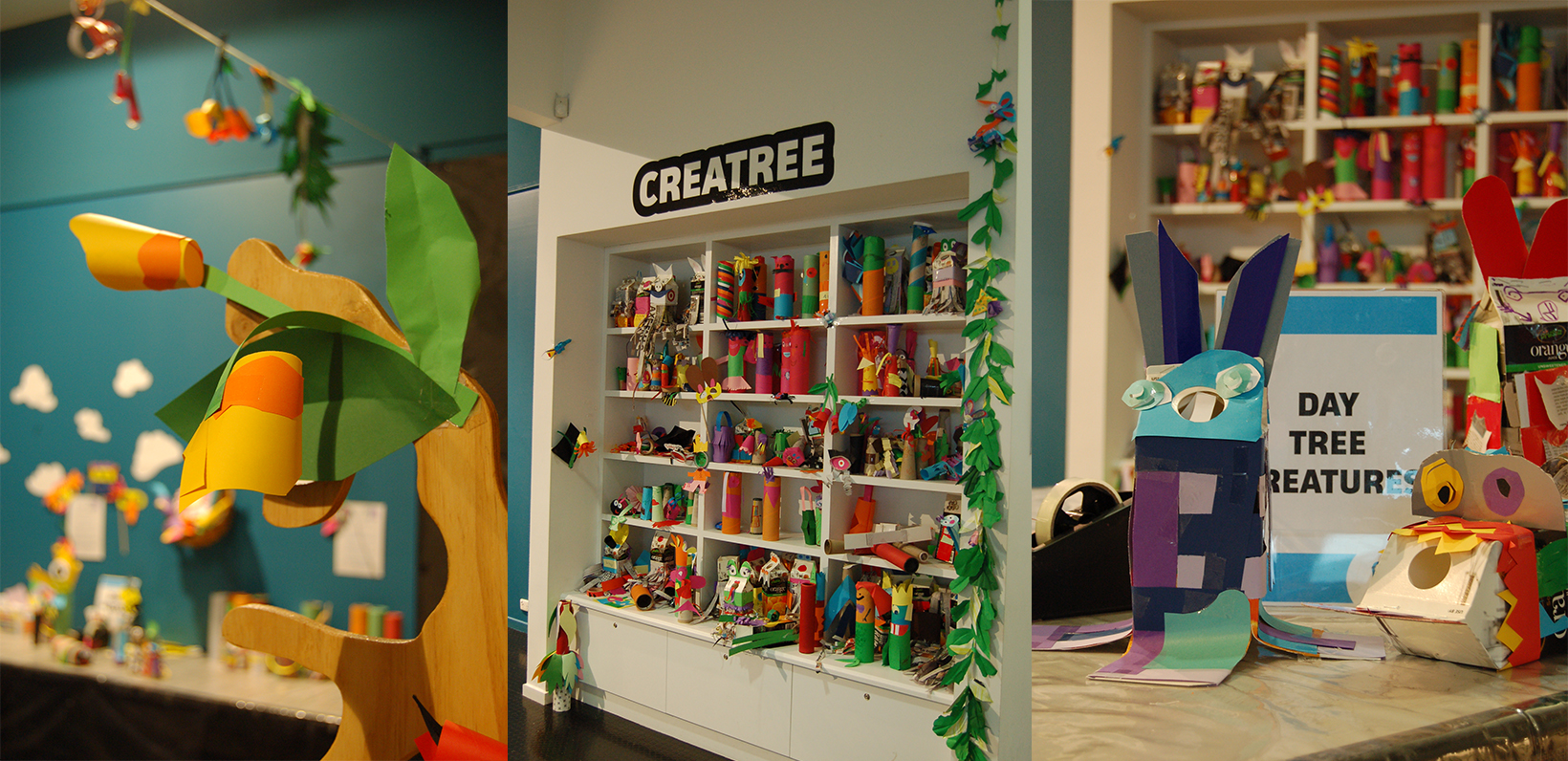
I took a fortnight off from my PhD at the end of June to complete some work for a children’s festival here in Warrnambool. It’s Australia’s largest kids festival and runs for eight days, Fun 4 Kids. This project was a great way to test out program design and installation approaches. I designed the space as a children’s craft space that would only use paper based products- no pipe cleaners or lil’ foam balls in sight!! Using this combination of coloured paper and reclaimed cardboard children were able to make an array of creatures including mini beasts and “day tree creatures”. Children were invited to help us populate the tree over and over the course of each day a unique and colourful ecosystem would appear- this was so much fun!

The craft programs were easy to adapt to different abilities and ages. One of the most beautiful things for me to watch was the way these craft activities worked to generate some great interactions between parents and children. It really was satisfying to watch.

Craft

The CreaTree is a sculptural tree designed to have a curtain sandwiched between it to create two spaces: the well lit Day Tree space and the Dream Tree Space, a dark space with UV Light. I constructed the tree using 17mm Ply Board and I have described it as “Becky’s version if Ikea”- it all flat packs down so it can fit into the back of our 4WD. The tree blots into a heavy steal base which I had made locally. The rest of the tree slots together using dowel joints- I am pretty proud of this sculpture, I worked my toshie off on it and it is quite beautiful. The black plastic in these photos is awful! I have made a really nice, deep blue curtain ready for the CreaTree’s next incarnation- the CreaTree concept lends itself to adaptable programing and I am looking forward to the next series!

Well for life, “come sit a while with me”

well fo life

Well For Life – COME SIT A WHILE WITH ME…

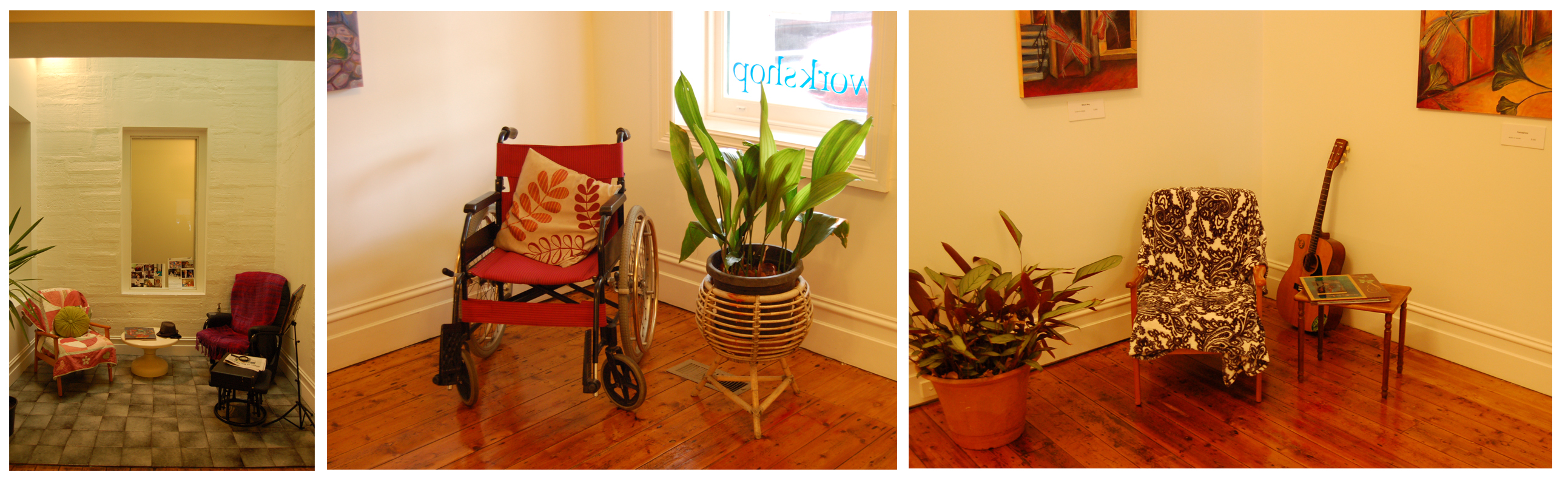
This program was initiated by Warrnambool City Council and the F Project and was delivered by my dear friend and favourite collaborator, Julie Poi Kelly  & me. The brief was to provide participants who have experienced brain injury with positive social connections and recognition of their rich life stories and contributions to our community.

“Come sit a while with me…” emerged

On Friday afternoons through February, March and April 2014 we gathered around a long table at the Archie Graham Centre in Warrnambool with seven (mostly) mature aged participants and their carers. Different techniques for making artworks were explored and individual visual languages developed. Each artist generously shared photographs and stories revealing the unique histories that have helped to bring them to this table. The goal was for each participant to create eight autobiographical artworks that would become the pages of their own “life story book”. This goal was reached through stellar performances!  Julie and I then undertook the process of collating each artist’s work into a single, 60 page hard cover printed book.

The final page of each story includes a picture of each participant on their favorite chair. This acts as an aesthetic marker of their personality and also provides a common position for audience members to engage- we all have a favorite spot to sit after all.

This project culminated at the Artery Gallery in an installation designed as a series of small living rooms each embracing a participant’s autobiographical art book. This installation was to unfold in the Ozone Walk as a part of the Hidden Histories Laneway Festival but early May rain sent us inside! I must give due credit to Julie- as I was recovering from surgery the task fell on her to curate our borrowed furniture, and she did a wonderful job! The space felt warm and personal. The Artery reported on the show’s popularity and how common it was for gallery visitors to spend time reading through each book.

Our busy Friday workshops together always finished with a cuppa and Julie & I always left feeling positive. It was been an incredible privilege to get to know this cast of characters- we have been moved by the stories shared, opening for us worlds within time, affirming the priceless value of relationships with loved ones and the breathtaking power of human resilience.

Taking the time to sit a while with these stories allows you to imagine the worlds they reveal and the strong spirits who live within them…

http://www.standard.net.au/story/2253858/artists-tell-stories-of-brain-injury-in-warrnambool-laneway-display/

http://www.standard.net.au/story/2258143/laneway-festival-move-indoors/

Above are links to two Warrnambool Standard Articles about this beautiful project 🙂

Sydney Field Trip

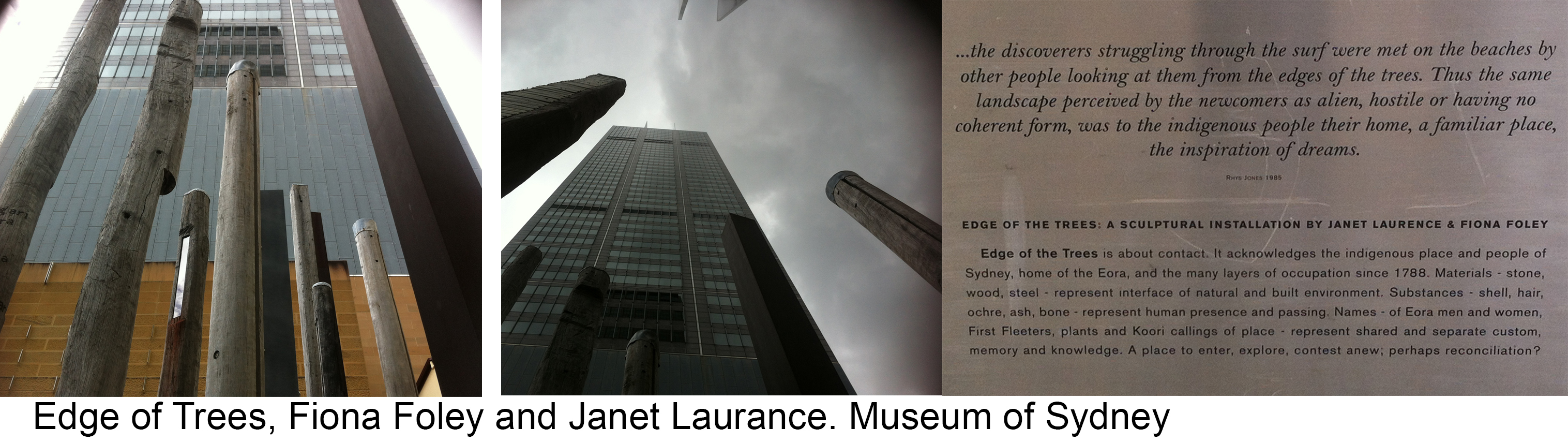
edge of trees 2

In late December 2013 I was able to make a research trip to Sydney. My aim was to see two spaces that I had viewed from a far for too long- Edge of Trees and Paddington Reservoir Gardens. I also took advantage of my temporary location by visiting a few other art sites.

I visited the amazing collection of contemporary Chinese art at White Rabbit Gallery in Central Sydney http://www.whiterabbitcollection.org/ , I was impressed by the way many of the works really grappled with the social, political and spiritual turbulence spurred by globalisation’s rapid pace. Gonkar Gyasto is the artist who has most stayed with me- his works deals with place and placelessness and identity.

After lunch I made the trek to Brett Whitley’s Studio in Surry Hills, http://www.artgallery.nsw.gov.au/brett-whiteley-studio/  where I spent time with epic self-portrait as a landscape, Alchemy. I had seen this work on an ABC Documentary http://www.abc.net.au/arts/artofaustralia/ and felt that Whiteley’s process of making an immense landscape as self-portrait and autobiographical narrative illustrated my notion of aesthetic subjectivity perfectly. I crawled over this painting for almost an hour.

brett_luminous

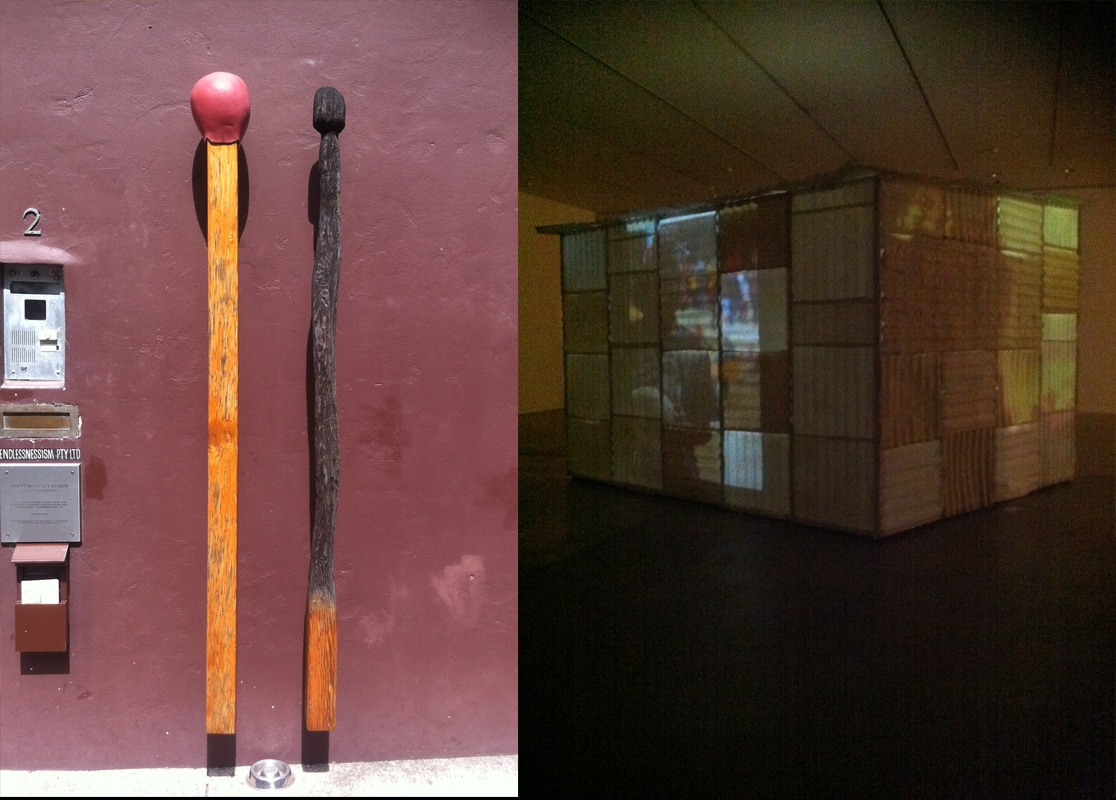
Walking back into Sydney Central I made my way to the Art Gallery of NSW. Here I was most keen to see the work Illuminate. The product of a community arts collaboration between paper makers and Euraba artists from Northern NSW. I found this work mesmerizing. A corrugated box hut made of paper and illuminated from the inside out by four video projectors which animate each of the four walls with documentary style footage- it became this glowing aesthetic object, what you imagine the intersection between memory and place, our memory and home may be.

On my second day I sought out Fiona Foley’s and Janet Laurence’s Edge of Trees and the Museum of Sydney Forecourt. I first saw this work on a documentary about Laurence on the ABC (God bless aunty) back in 2007 I think. At the time I was really impressed by her approached and just really “got it”. In this work trees originally felled from the area (that had taken seed pre-colonisation) were returned to the site as greyed, noble logs. Laurence and Foley have used a number of materials to convey and capture the memory of this site, Latin and indigenous names are inscribed on the poles and heard echoing through this relic site. This was one of those sites which visiting only enhanced my appreciation of it, I felt it as a really powerful memorial and as a place in which to come to terms with history. Sitting there on a Sunday morning with the noises of buses, cars and pedestrians I imagined what it would feel like in the quiet of 3am, in the dark would the speaker’s aboriginal voice echo in the urban still?

Edge of Trees 1

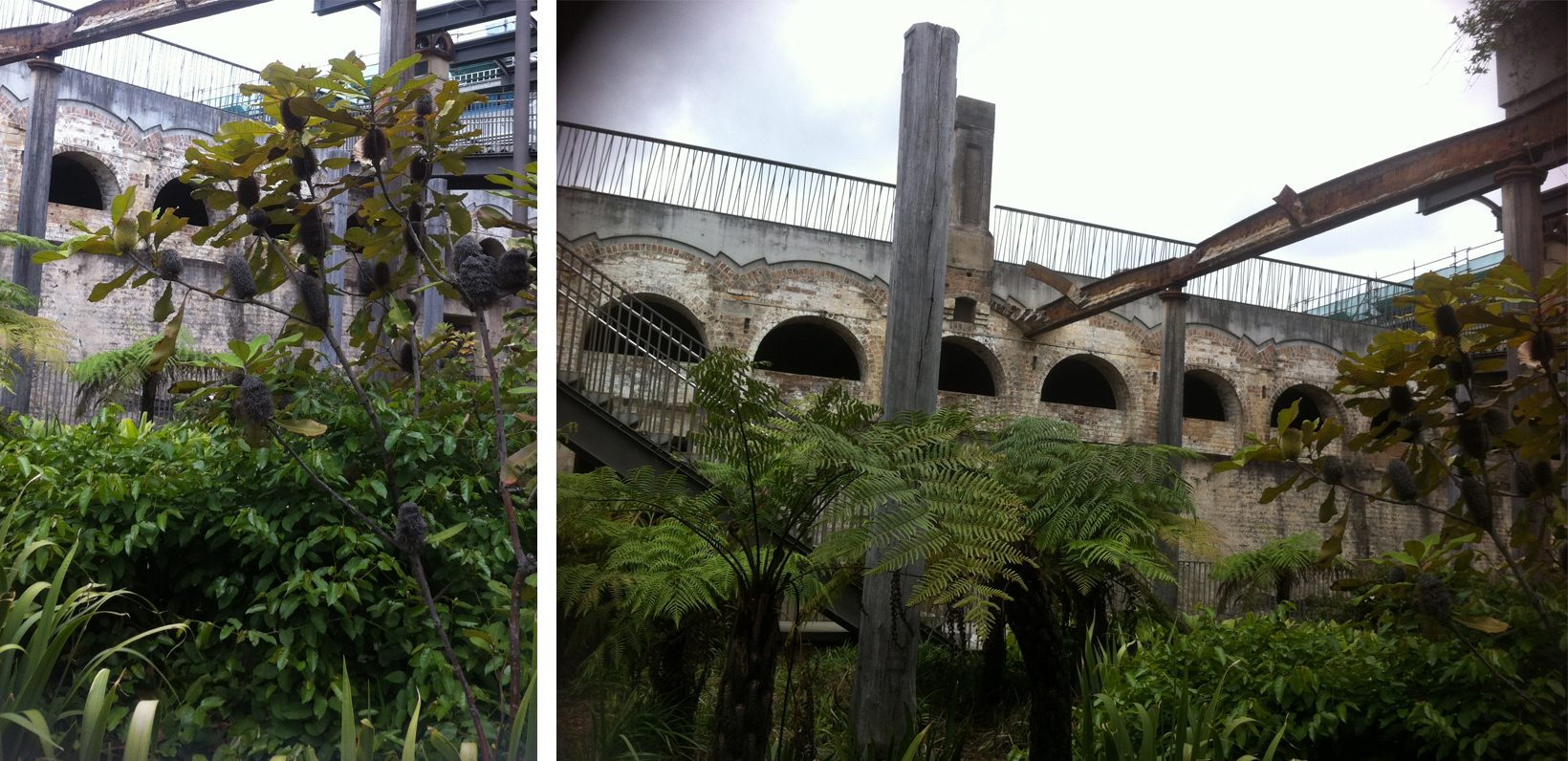
I took a punt and figured out how to use Sydney public transport just enough to get myself to Paddington. I bought myself a coffee, crossed the road and walked down the stairs into the Paddington Reservoir Gardens. A young lady sat taking flute lessons, a family picnicked on a section of grass. I looked around the space, beautiful- what I had expected, an eclectic intersection of ruins and landscape gardening that embodied that contemporary eco-aesthetic. But I was a little underwhelmed too, and that is not a bad thing, I really had to query why I was underwhelmed. My research has led me to look at our relationship to the environment and this has in turn revealed the many ways in which this relationship is constructed. This construction process is not always one in which we can exert our own agency however, it is not uncommon for the constructed spaces in which we find ourselves to be forces themselves in fact shaping our agency.

Paddington

I had stayed in Western Sydney and caught the train to and from that infamous urban landscape. Making my way into the Sydney CBD that morning it was impossible to ignore the way money concentrates itself as witnessed in the buildings of the area, their commercial occupants and their proximity to the harbor, the memory of that Edge of Trees nestled into this Western, globalized space. Sitting here in Paddington it was hard to detach from the awareness that this beautiful, ethical space was entwined in the circumstances of privilege that keep its nearby property prices so high. Another dimension to my underwhelming was to do with the difference between a space made using aesthetics to create a more neutral common area and a space made using aesthetics as a language to engage its visitors and its socio-historical contexts in order to push into a questioning of that relationship between subject and world.

These are questions and currents that keep pushing through my research and will be developed as I go. In two fast approaching weeks I will take flight for overseas field research in America and Japan. Questioning the processes of aesthetically made spaces will be a core task of this research. Stay tuned…

Making Spaces

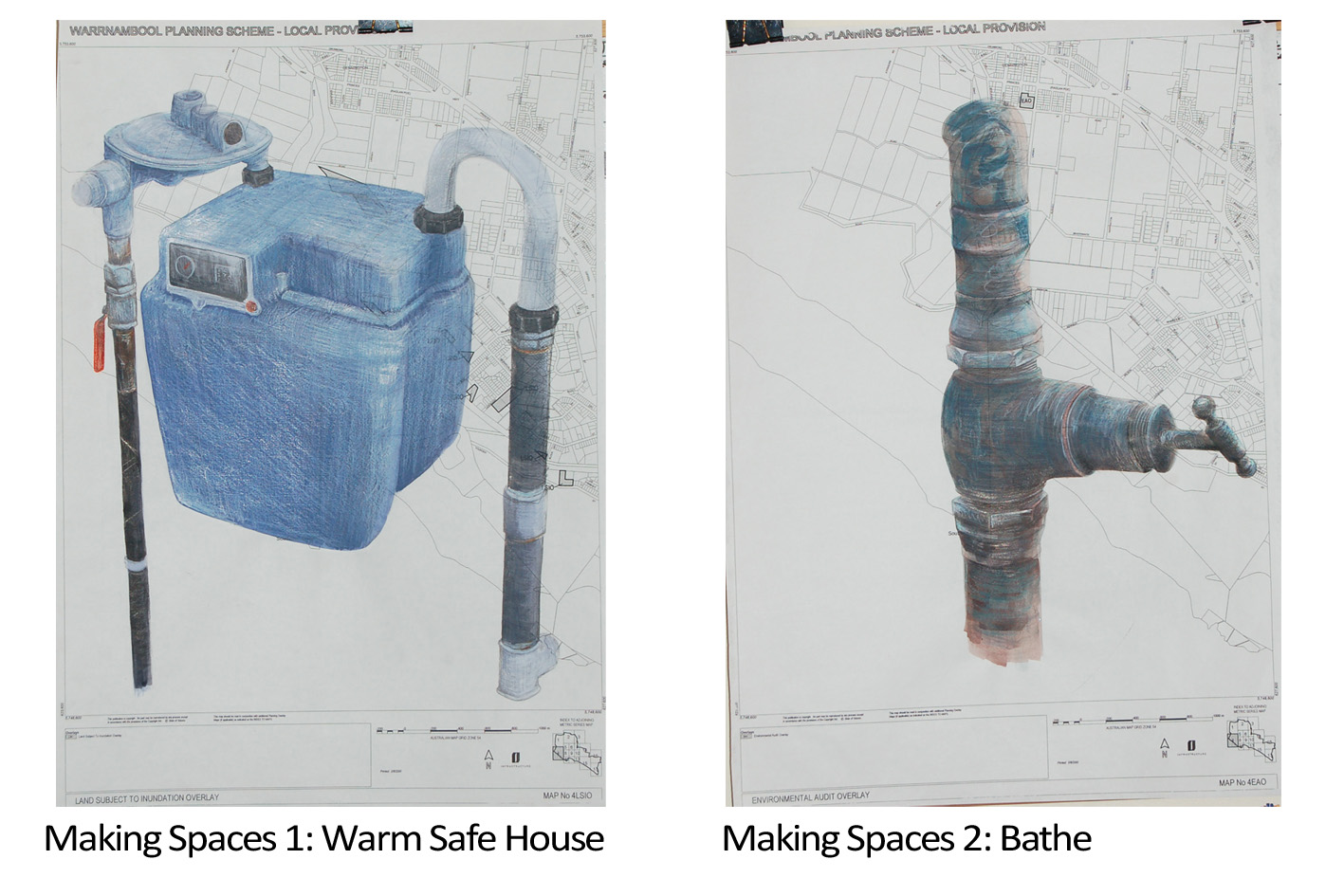
making space 1-2

The drawing series “Making Spaces” notes the shift in my understanding that occurred through the domestic observations I undertook through my PhD Research in 2013. I had come to see how the interfolding of body and environment was dynamic, reactive and productive. It could never be a pure, pre-reflective engagement. Perception is always prewired in some way. Just as each photograph I took of my domestic life operated to construct a scene, each perceptual engagement with space operated to construct that space, making it into a particular space dependent on the intention and activity of the subject and the resources and conditions of the given space.


I saw these drawing works as indicating some of the processes that enable us to make the ordinary (almost invisible in their apparent un-remarkableness) spaces of our everyday worlds. I chose to draw on maps which were directly relevant to my ordinary life. The maps include the location of my children’s school, family daycare and my house. My previous year’s research into the operation of ecosystems, Warrnambool’s geology and indigenous understanding and connection to land combined with a deepened understanding of Colonisation’s material processes of naming, dividing, selling and “developing” land. This utterly changed the way I perceive the fixed, concreteness of urbanization, its infrastructure and the cultural practices it enables. I see these drawings as an interaction between the maps, the drawn image and the title. To me this is a way of grappling with the actual material reality of how it is that we shape land and resources in order to produce and maintain the homogeneity of contemporary urban life and the regular comforts this enables.

making spaces 3-4

making spaces 5-6